

Are you ready to unlock the power of cryptocurrency mining at home? With the rise of digital currencies, mining has become a popular way to earn passive income.
In this guide, we will take you through the basics of cryptocurrency mining at home, covering the equipment and setup requirements, choosing the right cryptocurrency, and maximizing your earnings.
What is Cryptocurrency Mining?
Cryptocurrency mining is the process of verifying transactions on a blockchain network and adding them to the public ledger, known as a block.
Miners use powerful computers to solve complex mathematical problems, which helps to secure the network and validate transactions.
In return, miners are rewarded with a certain amount of cryptocurrency, such as Bitcoin or Ethereum.
This process is essential to the functioning of a blockchain network, as it allows for secure and transparent transactions.
Why Mine Cryptocurrency at Home?
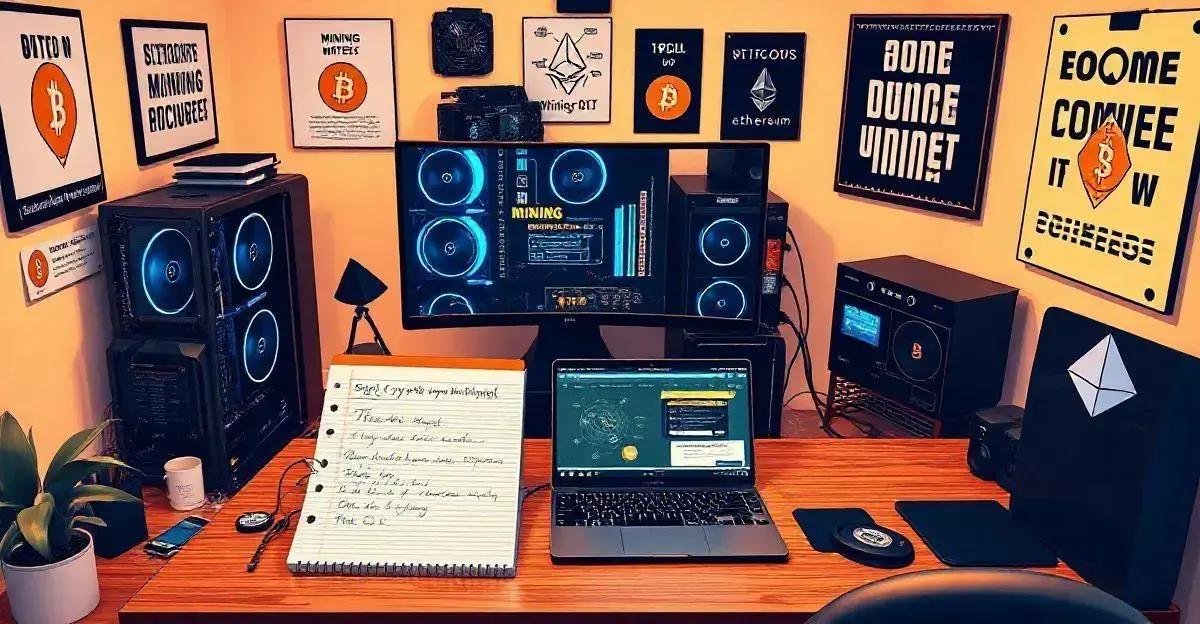
Mining cryptocurrency at home offers several benefits, including increased security, reduced costs, and greater control over your mining operations.
By setting up a mining rig in your home, you can avoid the risks associated with cloud mining, such as losing access to your funds or having your mining data compromised.
Additionally, mining at home allows you to adjust your setup to optimize your earnings, experiment with different mining configurations, and troubleshoot any issues that may arise.
Equipment and Setup Requirements
To start mining cryptocurrency at home, you’ll need a few essential pieces of equipment. The most critical component is a high-performance graphics card (GPU), which is responsible for solving complex mathematical problems to validate transactions.
You’ll also need a suitable CPU, motherboard, and power supply to support your GPU. Additionally, you’ll need a cryptocurrency wallet to store your mined coins and mining software to connect to the blockchain network.
It’s essential to choose the right equipment and setup for your specific needs, as it will directly impact your mining efficiency and profitability.
Choosing the Right Cryptocurrency

When choosing the right cryptocurrency to mine, it’s essential to consider factors such as its market capitalization, block reward, and mining difficulty. You should also research the cryptocurrency’s potential for growth and its competition in the market. Additionally, you’ll want to look into the mining algorithm and the hardware requirements for mining.
Some popular cryptocurrencies for mining include Bitcoin, Ethereum, and Litecoin. It’s crucial to choose a cryptocurrency that aligns with your resources and goals, as it will impact your mining efficiency and profitability.
Mining Pool Options and Strategies
Mining pools are groups of miners who work together to solve complex mathematical problems and share the rewards.
Joining a mining pool can increase your chances of solving a block and earning a reward, as you’ll be combining your processing power with that of other miners.
There are several types of mining pool options, including public pools, private pools, and solo mining.
Public pools are open to anyone and offer a transparent and decentralized way to mine cryptocurrencies.
Private pools, on the other hand, are invitation-only and often require a significant amount of processing power to join.
Solo mining, as the name suggests, involves mining alone, which can be more challenging but offers complete control over your mining operations.
Troubleshooting Common Issues

When troubleshooting common issues with your cryptocurrency mining setup, it’s essential to identify the root cause of the problem. This may involve checking your equipment, software, and network connections.
Common issues include high electricity costs, poor mining performance, and difficulty connecting to the blockchain network. To resolve these issues, you can adjust your mining settings, update your software, or consult with a professional.
Additionally, it’s crucial to stay up-to-date with the latest developments in cryptocurrency mining and to adapt your strategy as needed. By doing so, you can minimize downtime, optimize your mining operations, and maximize your earnings.
FAQ – Frequently Asked Questions about Cryptocurrency Mining
What is cryptocurrency mining?
Cryptocurrency mining is the process of verifying transactions on a blockchain network and adding them to the public ledger, known as a block, in exchange for a reward.
Why mine cryptocurrency at home?
Mining cryptocurrency at home offers several benefits, including increased security, reduced costs, and greater control over your mining operations.
What equipment do I need to start mining cryptocurrency?
To start mining cryptocurrency, you’ll need a high-performance graphics card (GPU), a suitable CPU, motherboard, and power supply to support your GPU, as well as a cryptocurrency wallet and mining software.
How do I choose the right cryptocurrency to mine?
When choosing the right cryptocurrency to mine, consider factors such as its market capitalization, block reward, and mining difficulty, as well as research the cryptocurrency’s potential for growth and competition in the market.
What are mining pool options and strategies?
Mining pools are groups of miners who work together to solve complex mathematical problems and share the rewards. Joining a mining pool can increase your chances of solving a block and earning a reward.
How do I troubleshoot common issues with my cryptocurrency mining setup?
When troubleshooting common issues with your cryptocurrency mining setup, identify the root cause of the problem, check your equipment, software, and network connections, and adjust your mining settings or consult with a professional as needed.